HPE ProLiant Rack Servers
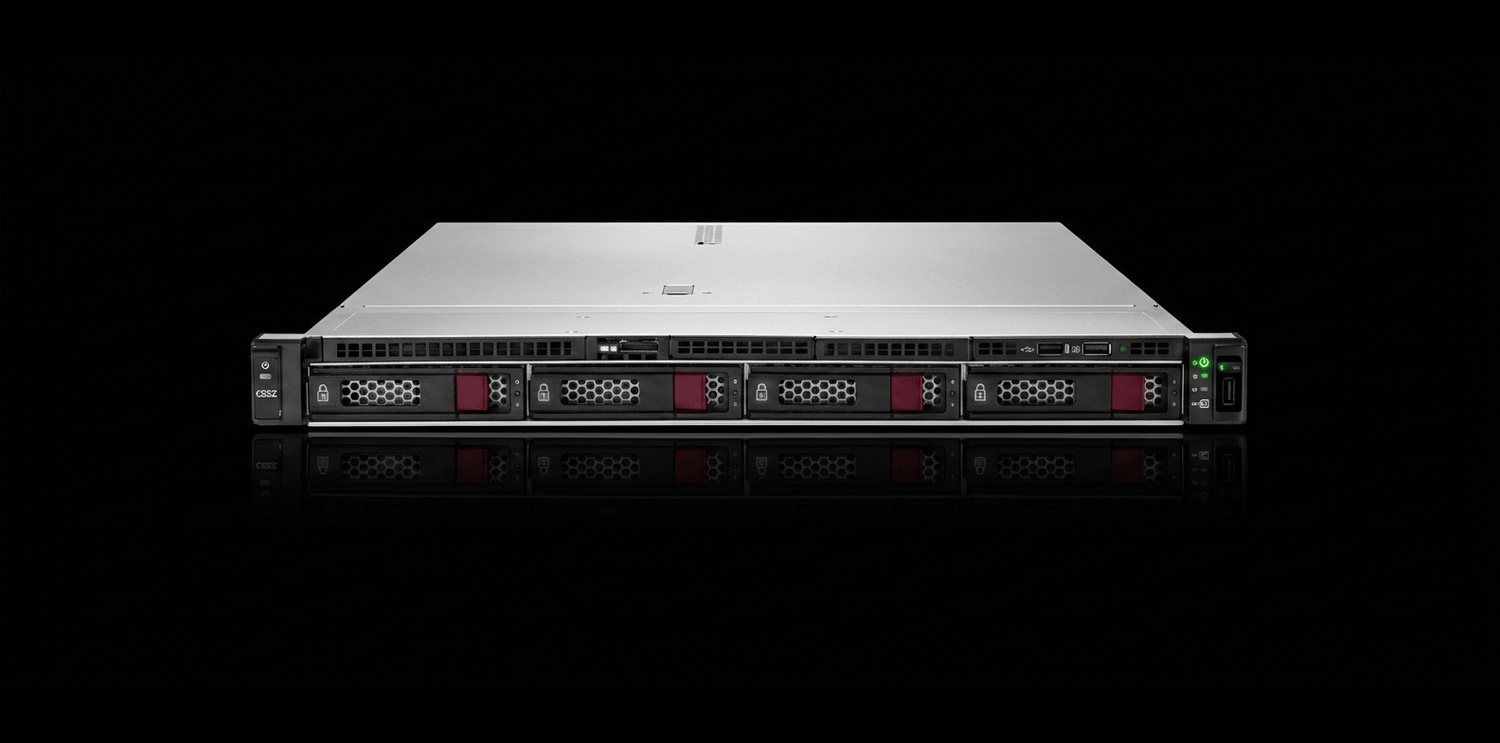
In a world of distributed applications and data, your infrastructure needs to be agile, secure, and optimized for performance from the edge to the data center. HPE ProLiant Rack Servers are engineered to meet this demand, providing a foundation for your hybrid world with a cloud-native operating experience, deeply integrated security, and performance tailored to your most critical workloads.
Powered by the latest generation of Intel® Xeon® and AMD EPYC™ processors, the ProLiant family delivers the raw computational power required for virtualization, data analytics, AI, and edge computing. Whether you need the high density of a 1U server or the expansive storage and scalability of a 2U platform, HPE ProLiant provides a flexible, efficient, and secure compute backbone for your business.
At the heart of every HPE ProLiant server is a commitment to delivering uncompromising performance. Supporting the newest single-socket Intel® Xeon® (up to 144 cores) and AMD EPYC™ (up to 192 cores) processors, massive memory capacities up to 6 TB, and high-speed PCIe Gen5 I/O, these servers are built to handle data-intensive tasks and accelerate application response times. This powerful core enables support for multiple GPUs and advanced storage form factors like EDSFF, making the platform ideal for AI, machine learning, and software-defined storage.
Performance is matched by a security foundation that begins in the silicon. The HPE silicon root of trust creates an immutable digital fingerprint, verifying firmware integrity before the server even boots to protect against sophisticated threats. This hardware-level security, combined with the comprehensive remote management capabilities of HPE Integrated Lights-Out (iLO), provides a secure, efficient, and cloud-enabled experience for managing your server infrastructure at scale.
Selecting the right server configuration is a critical decision that impacts performance, scalability, and total cost of ownership. With numerous models, processor options, and storage configurations available in the HPE ProLiant portfolio, aligning the ideal hardware with specific workload requirements demands careful analysis.
Nexus ITX helps organizations navigate this complexity. We provide the focused, in-depth information needed to evaluate and compare HPE ProLiant Rack Servers in the context of your unique technical and business objectives.
Q: What is the HPE silicon root of trust?
A: The HPE silicon root of trust is a fundamental security feature embedded directly into the server hardware. It creates an immutable digital fingerprint in the silicon that verifies the integrity of the server's essential firmware before it is allowed to boot. This protects the system against firmware-level attacks and ensures the server starts in a known, uncompromised state.
Q: What is the primary benefit of HPE Integrated Lights-Out (iLO)?
A: HPE iLO is a remote server management processor that enables you to securely configure, monitor, and update your HPE ProLiant servers from anywhere in the world. It provides a complete out-of-band management solution, meaning you can manage the server even when its operating system is offline, simplifying administration and reducing operational overhead.
Q: What are the main differences between the 1U and 2U ProLiant models?
A: Generally, 1U models (like the DL320, DL325, and DL360 series) are optimized for compute density, making them ideal for space-constrained environments or scale-out workloads like virtualization and web hosting. 2U models (like the DL340, DL345, and DL380 series) offer greater expandability, supporting more storage drives, PCIe slots, and often higher memory capacities, making them better suited for data-intensive applications, large databases, and software-defined storage.
Q: What kind of processors do the latest HPE ProLiant Gen11 and Gen12 servers support?
A: The latest generations of HPE ProLiant servers support 4th/5th Generation Intel® Xeon® Scalable processors (up to 60 cores), Intel® Xeon® 6 processors (up to 144 cores), and 4th/5th Generation AMD EPYC™ Series processors (up to 192 cores). This provides a wide range of options to balance core count, frequency, and price for different workloads.
Q: How does PCIe Gen5 benefit modern workloads?
A: PCIe Gen5 doubles the bandwidth of the previous generation (PCIe Gen4). This high-speed I/O is critical for modern, data-intensive workloads as it enables faster communication between the CPU and peripheral components like high-speed network adapters (NICs), storage controllers, and GPU accelerators used for AI and machine learning.
Q: How can Nexus ITX help me choose the right HPE ProLiant configuration?
A: Nexus ITX can assist by helping you analyze your specific workload requirements—such as processing demands, memory footprint, storage capacity, and network throughput. We help you compare the features and technical specifications of different ProLiant models to determine which configuration best aligns with your technical needs and long-term scalability goals.
Contact us to discuss your technical requirements and evaluate the optimal HPE ProLiant configuration for your organization.