WLAN Antennas
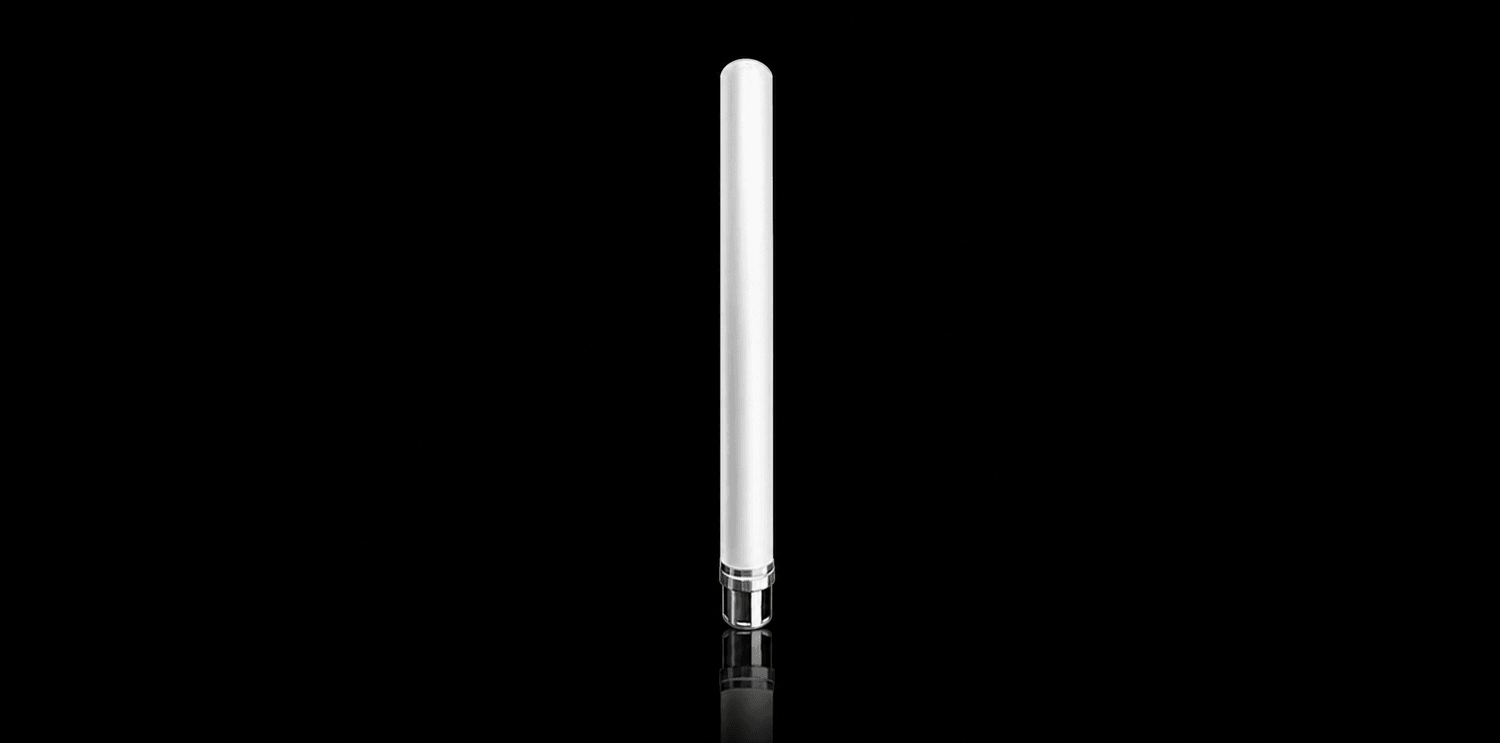
In any wireless network, the antenna is the critical final link, converting radio signals into electromagnetic waves to deliver connectivity where it's needed most. A mismatch between your access point's capabilities and your antenna's coverage pattern can lead to poor performance, dead zones, and user frustration. Huawei addresses this challenge with a comprehensive portfolio of WLAN antennas designed to optimize and extend wireless coverage for a wide range of enterprise environments.
Engineered to work seamlessly with Huawei Access Points, these antennas provide the flexibility to tailor your wireless infrastructure to specific physical layouts and application demands. Whether you need to blanket a large, open area with 360-degree coverage or focus a signal down a long corridor or across a campus, this series offers a model to meet your technical requirements.
The Huawei WLAN antenna portfolio is built on a foundation of flexibility and reliability. The series includes a vast selection of models, from compact, lightweight units ideal for discreet indoor deployments to large, robust arrays designed for challenging outdoor conditions. This variety in form factor, weight, and size ensures that network architects can find a precise fit for any physical space or mounting constraint.
Designed for straightforward installation, these antennas feature standard connector types, including RP-SMA-J and various N-type interfaces, ensuring compatibility with corresponding Huawei APs. Key performance indicators like a low Voltage Standing Wave Ratio (VSWR), typically 1.5 or 2, signify efficient power transmission and signal integrity, contributing to a stable and high-performing wireless network.
Selecting the right antenna from a portfolio as extensive as Huawei's is critical for achieving your network performance goals. Factors like beamwidth, gain, physical dimensions, and AP compatibility must be carefully mapped to your specific environment and use case. An incorrect choice can lead to coverage gaps or unnecessary interference, undermining your wireless investment.
NEXUS ITX provides the advisory assistance needed to navigate these complexities. We help your organization analyze its requirements and align them with the most suitable antenna technology, ensuring your wireless infrastructure is built on a solid and efficient foundation.
Q: What is the main difference between an omnidirectional and a directional Huawei antenna?
A: An omnidirectional antenna radiates signals in a 360-degree pattern, similar to a light bulb, making it ideal for covering wide, open areas like a large room or an outdoor plaza. A directional antenna focuses the signal in a specific direction, like a spotlight, which is useful for long-distance point-to-point links or covering a long, narrow space like a corridor.
Q: What does the VSWR specification (e.g., 1.5 or 2) mean?
A: Voltage Standing Wave Ratio (VSWR) is a measure of how efficiently radio-frequency power is transmitted from the access point through the antenna. A lower VSWR value (closer to 1) is better, indicating that less signal is reflected back and more power is radiated out. The typical values of 1.5 or 2 for Huawei antennas represent efficient and reliable performance.
Q: What types of connectors do Huawei WLAN antennas use?
A: The Huawei antenna series uses several industry-standard connector types to connect to access points. Common types mentioned in the specifications include RP-SMA-J, N-female, N-J, and N-male connectors. The specific type and number of connectors vary by model.
Q: How do I select the correct antenna for my specific Huawei Access Point (AP)?
A: Choosing the right antenna involves matching the antenna's frequency bands, connector types, and number of ports to the specifications of your Huawei AP. You must also consider the desired coverage pattern (omnidirectional vs. directional) and gain required for your environment. Nexus ITX can help you evaluate these technical requirements to compare suitable antenna models for your APs.
Q: Are there antenna models suitable for outdoor deployment?
A: Yes, the portfolio includes a wide range of physical sizes and designs, including larger, more robust models intended for outdoor and challenging environmental conditions. When evaluating models, it is important to check the specific IP rating and operating temperature range for outdoor suitability.
Contact us to evaluate the extensive Huawei antenna portfolio and align the right model with your technical and coverage requirements.